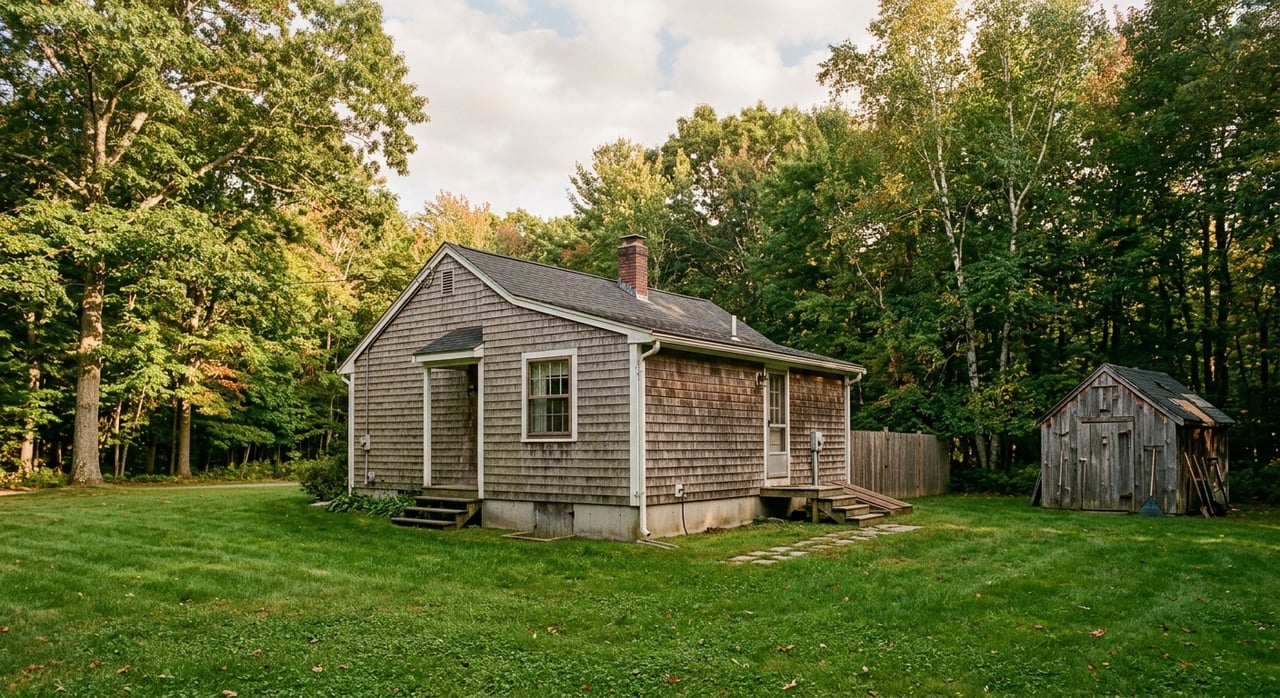
What To Know Before Buying A Cottage In Bridgman
July 2, 2026
Are you dreaming about a cottage in Bridgman for weekend escapes, summer living, or a long-term investment in your lifestyle? It is easy to focus on the charm of a small house near Lake Michigan, but the smartest buyers also look closely at taxes, zoning, lot conditions, and seasonal upkeep before they make an offer. If you are considering buying a cottage in Bridgman, this guide will help you understand what matters most so you can move forward with more confidence. Let’s dive in.
Bridgman is not just a standard year-round housing market. City planning materials show that seasonal housing made up 14% of the housing stock in 2020, up from 9.8% in 2015. That tells you cottages and part-time homes are a real part of the local market, not a niche afterthought.
The city also has a long connection to lake-oriented recreation. Bridgman’s history notes that the Lake Michigan shoreline became popular in the 1920s, and Weko Beach has drawn visitors from around the region for decades. If you want a quieter Southwest Michigan base with strong seasonal appeal, Bridgman fits that profile well.
At the same time, local value context matters. City planning materials list a 2023 median household income of $71,435 and a median owner-occupied home value of $228,800. That gives you a useful baseline as you compare a cottage purchase against the broader local market.
One of the first things to know about buying a cottage in Bridgman is that there is no single cottage model. The housing stock can include older detached cottages, smaller in-town homes, and newer infill homes, depending on where you look. In practical terms, your search is often as much about the lot, setting, and neighborhood pattern as it is about square footage.
Bridgman’s master plan describes a mix of residential forms, including detached homes, smaller homes, infill, and walkable downtown residential patterns. The Lake Residential District is intended for single-family housing on relatively large lots that respond to critical dunes, mature woods, and changing Lake Michigan conditions. The Urban Residential District, by contrast, is characterized by smaller single-family homes on traditional grid streets.
That difference matters when you compare properties. A cottage near the lake may offer a very different ownership experience than a small house closer to downtown. One may come with more natural-setting considerations, while the other may be more about walkability and lot efficiency.
In Bridgman, site conditions can shape both your enjoyment of the property and your future costs. That is especially true if you are looking near Lake Michigan or in dune-influenced areas. Before you fall in love with a cottage, take time to understand the parcel itself.
The city’s master plan says Bridgman contains 676 acres of Critical Dune Areas, primarily between Lake Michigan and Red Arrow Highway. It also notes that one neighborhood lies within the critical dune area. If a property falls in one of these areas, your future plans for improvements may involve additional review and permitting.
EGLE states that regulated activity in Critical Dune Areas requires a permit. That can affect how you think about additions, grading, exterior changes, or other site work. For a buyer, that means due diligence should cover more than the home inspection.
If you are shopping for a cottage with lake proximity, shoreline conditions deserve serious attention. Bridgman’s master plan reports 30-year projected shoreline recession distances of 55 to 145 feet and 60-year projected distances of 95 to 275 feet in southern Bridgman. The same planning guidance tells Lake Residential buyers to account for changing lake levels, wave impacts, and storm surge.
Those details do not mean every lake-area property is a poor fit. They do mean you should be realistic about long-term stewardship, insurance questions, and any future building plans. A beautiful setting can still come with limits you need to understand clearly before closing.
Flood status is another key item. EGLE says FEMA Flood Insurance Rate Maps are the primary source of floodplain mapping in Michigan, and Bridgman’s master plan also discusses flood zones and Great Lakes flood study maps. Before you buy, confirm the parcel’s flood status and ask how that may affect ownership costs.
Many cottage buyers imagine simple future updates like an addition, porch upgrade, exterior remodel, or reworked site plan. In Bridgman, those plans should always be checked against current zoning and permit requirements. The city’s hybrid zoning approach means local form and site rules can have a real impact on what is possible.
The city’s zoning resources show that building form, facades, parking, signs, and general site rules matter locally. Bridgman’s Building and Zoning department is responsible for construction, remodeling, alteration, repair, and demolition code enforcement. The city also provides applications for building permits, zoning permits, plan review, site plan review, and variances.
That is why it helps to ask questions early. If a cottage only works for you with a future renovation, you will want to verify that path before you commit. This is especially important for dune-area or lake-area parcels where site constraints may be more significant.
A cottage can offer easy enjoyment, but seasonal ownership is never completely hands-off. Bridgman has snowy winters, with an average January high of 30°F and low of 21.2°F. If the home will sit vacant for stretches of time, winterization and off-season care should be part of your budget from day one.
The city’s Department of Public Services handles streets, culverts, signs, city buildings, leaf and brush pickup, snow and ice removal, and water and storm sewer infrastructure. That supports a straightforward service environment, but it does not remove the need for private property maintenance. You should still plan for roof and gutter care, pipe protection, exterior checks, and routine monitoring during colder months.
This is one of the biggest differences between buying a cottage and buying a year-round primary home you occupy every day. A vacant property can develop small problems that become expensive if they go unnoticed. For many buyers, building a realistic maintenance plan is just as important as choosing the right location.
It is smart to understand utility structure before you buy, especially if you are comparing a cottage to another second-home option nearby. Bridgman’s water and sewer rates, effective July 1, 2025, include $4.93 per 1,000 gallons of water and a $10.76 monthly water ready-to-serve charge. Sewer costs are listed at $15.00 per 1,000 gallons plus a $34.86 monthly sewer ready-to-serve charge for typical residential service.
The city also says a separate lawn meter can be purchased for $185 so irrigation water is not charged sewer. If you are buying a property with substantial landscaping or lawn watering needs, that may be worth exploring. Even modest utility details can shape your long-term carrying costs.
This is one of the most important financial points for cottage buyers in Michigan. Bridgman’s FAQ explains that when a property is bought in the prior year, the taxable value is uncapped. The Michigan Department of Treasury also confirms that a transfer of ownership generally causes taxable value to uncap in the calendar year following the transfer.
In plain terms, that means the seller’s current tax bill may not be a reliable estimate of what you will pay after purchase. If you buy a cottage based only on the current taxes shown in a listing, you could underestimate your future carrying costs. This is a critical part of pre-offer budgeting.
Bridgman also notes that assessed or equalized value is 50% of fair market value. If you have concerns about assessed value after purchase, the Board of Review is an available process for contesting it. Tax due dates listed by the city for 2026 are September 14, 2026 for summer bills and February 15, 2027 for winter bills.
If the property will be a second home, do not assume it will receive homestead treatment. Bridgman states that the Principal Residence Exemption applies to a primary residence the owner occupies for 6 months every year. The exemption removes local school operating millage from qualifying properties.
For many cottage buyers, that exemption will not apply. Bridgman’s FAQ lists the summer 2026 non-homestead millage at $41.0887 per $1,000 of taxable value. That can create a meaningful difference in ownership cost compared with a primary residence.
This is why second-home budgeting in Bridgman should include more than mortgage and insurance. Your tax structure may be very different from that of an owner-occupied primary home. Running the numbers carefully can help you avoid surprises after closing.
If you hope to offset costs with short-term rental income, verify the current rules directly with the city before you underwrite any revenue. Bridgman’s zoning materials point buyers to the current zoning ordinance, and planning materials show that seasonal rentals have been an ongoing policy topic. A 2021 planning commission packet proposed district-based short-term rental limits, and a 2024 planning commission packet lists a legislative update on short-term rental regulation.
The takeaway is simple. Rental use should be treated as a current zoning question, not a built-in feature of cottage ownership. Before you buy, confirm what is allowed for that specific property and what approvals may be needed.
This step protects you from making a decision based on assumptions. It is especially important if projected rental income is part of how you plan to justify the purchase.
Practical details matter, but so does the experience you want from the property. Bridgman offers a strong mix of amenities that support weekend and seasonal use, including Weko Beach, Weko Campground, Toth Street Park, Legion Park, and the Downtown Bridgman Courtyard. Local and regional tourism information also highlights the social district, Courtyard Park concerts, the open-air market from mid-May to mid-October, and nearby Warren Dunes State Park.
Warren Dunes State Park is noted for three miles of shoreline, six miles of hiking trails, and dog-beach access. That broader recreation base is part of what makes Bridgman appealing as a cottage market. You get access to lake-oriented living and outdoor activities without losing the feel of a smaller Southwest Michigan community.
When you tour cottages, think about how you will actually use the home. Are you looking for beach access, lower-maintenance in-town living, or a property that feels more tucked into the landscape? The right choice usually comes from matching the property to your real routine, not just the dream version of it.
Before you move forward on a cottage in Bridgman, make sure you can answer these questions clearly:
The more clearly you answer these questions upfront, the more confident your purchase decision will be. In a market like Bridgman, informed buyers tend to make better long-term decisions.
A cottage in Bridgman can be a great lifestyle purchase, whether you want a weekend retreat, a seasonal base near Lake Michigan, or a property that supports your long-term plans in Southwest Michigan. The key is looking beyond the charm and understanding the local realities of land, taxes, zoning, and upkeep. If you want thoughtful guidance as you explore cottages in Bridgman and the broader lakefront corridor, reach out to Cameron Mammina.
Stay up to date on the latest real estate trends.
Contact me to learn how I deliver exceptional customer service to every client.