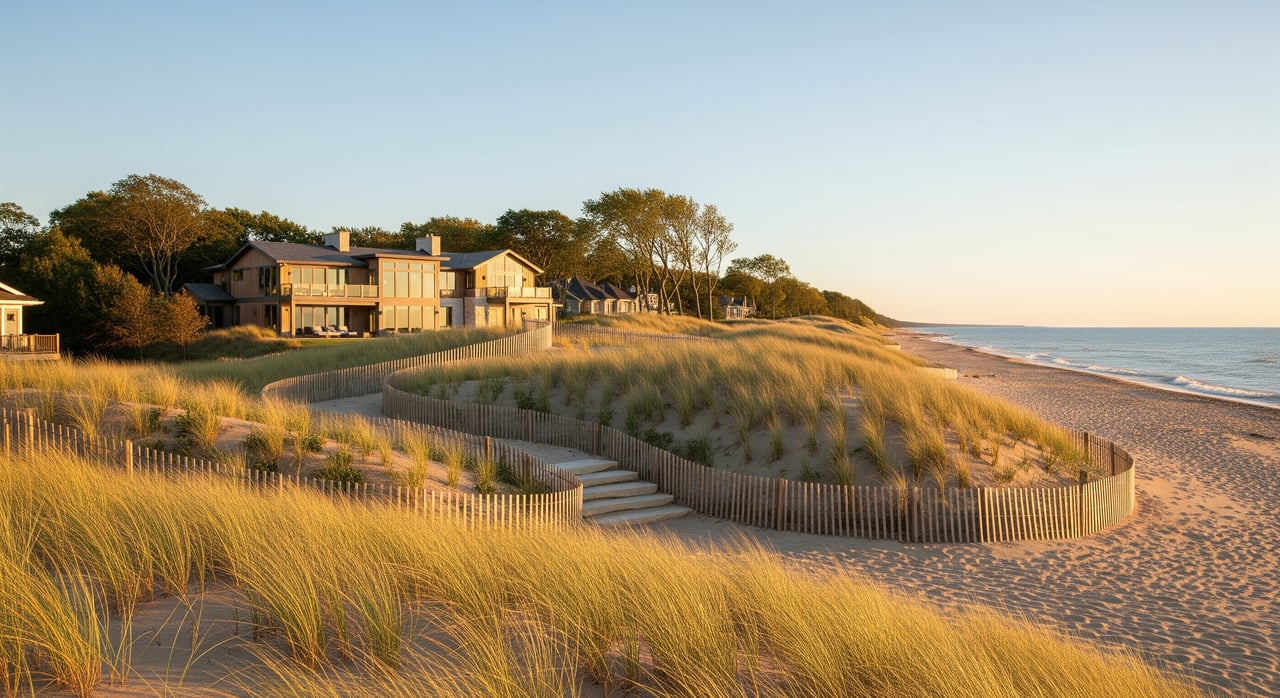
Native Dune Landscaping That Protects Your Investment
October 16, 2025
Worried about wind and waves reshaping your Lake Michigan dune lot? You’re not alone. In Berrien County, the right native dune landscaping can help stabilize sand, reduce erosion, and protect your long-term investment while supporting a healthy shoreline. In this guide, you’ll learn what to plant, how to design for stability, and which permits to check before you start. Let’s dive in.
Native dune vegetation protects upland property by trapping sand and building dune volume over time. According to the state’s dune program, healthy dune systems buffer storms and maintain natural sand movement that keeps shorelines resilient (EGLE Critical Dune Areas).
American beachgrass is a workhorse on the foredune. Its dense rhizomes hold sand in place and help dunes grow with the wind (beachgrass guidance). Mixed native grasses and forbs add diversity and stability behind the foredune. These plant-based approaches help maintain natural dune function, which is often preferable to hard armoring that can disrupt sand along the coast (coastal policy overview).
One extra consideration: dense beachgrass is flammable. Plan defensible space and consult local fire officials and MSU Extension wildfire tips for Great Lakes shorelines (wildfire safety overview).
Dune projects are regulated. A few checks up front can save time and money.
First, confirm if your property is inside a Critical Dune Area. Use the state’s maps and story map tools to see boundaries and what activities may need permits (state CDA maps).
Many dune projects fall under Part 91 soil erosion rules. In Berrien County, the Drain Commissioner handles SESC permits and pre-site inspections. Contact the office before altering vegetation or grading sand (Drain Commissioner).
The Berrien County Conservation District assists with vegetation assurance plans, native plant sourcing, and inspections. They are a go-to partner for revegetation and monitoring requirements (BCCD Critical Dunes).
If your project could affect an on-site septic system, coordinate with the Berrien County Health Department for any required permits or reviews (On-Site Septic guidance).
Think in simple zones from lake to upland. Plant the right species in the right place to improve stability and resilience.
Start with American beachgrass (Ammophila breviligulata) on the foredune. It tolerates burial and salt spray, traps sand, and builds dune height (beachgrass guidance).
Behind the foredune, use a mix of native grasses and forbs suited to Great Lakes dunes, such as little bluestem, switchgrass, seaside goldenrod, and beach pea. This mix strengthens the dune body and adds biodiversity (Great Lakes dune community).
In sheltered backdune areas, consider dune-tolerant shrubs and trees where appropriate and allowed. Choose species based on site conditions and any permit requirements (Great Lakes dune community).
Beachgrass plugs are commonly planted in the dormant season, fall through early spring, with many conservation programs offering spring and fall sales. Spacing depends on site energy and erosion risk. Typical guidance is:
Plant 1 to 3 culms per hole and set crowns deep enough to resist wind blowout, following local guidance for depth and technique (beachgrass guidance).
A few simple measures help new plantings take hold and protect your dune.
These soft-engineering tools support natural sand transport and limit the need for hard structures. If erosion is severe, consult agencies first. Vegetation and soft techniques are encouraged where feasible, with hard armoring considered only when necessary and permitted (coastal policy overview).
Some dunes host sensitive species. Pitcher’s thistle is federally threatened and has been recorded in Berrien County; its presence can affect project timing and methods. Confirm status and avoid harm by coordinating with agencies when needed (Pitcher’s thistle profile).
Watch for invasive plants that can undermine native plantings. Plan for ongoing control as part of your long-term stewardship (EGLE Critical Dune Areas).
New plantings need protection from foot traffic and regular checks for plant survival and invasive outbreaks, especially in the first few years. Many permits require monitoring. Given that some dune grasses are flammable, talk with local fire officials and review shoreline wildfire practices to maintain defensible space (wildfire safety overview).
Before installing fencing or altering vegetation near the water, verify property lines and whether areas near the shoreline are public trust. Use state mapping tools and work with local authorities to avoid conflicts and ensure proper authorization (state CDA maps).
Native dune landscaping is more than curb appeal. It is an investment in shoreline stability, lower long-term maintenance, and a stronger resale story that aligns with Berrien County’s coastal stewardship goals. If you are planning a project or weighing lot improvements, let’s talk about timing, permitting, and how to position your property for market.
Ready to align your dune plan with your real estate goals? Connect with Cameron Mammina for local guidance grounded in Harbor Country knowledge.
Stay up to date on the latest real estate trends.
Contact me to learn how I deliver exceptional customer service to every client.